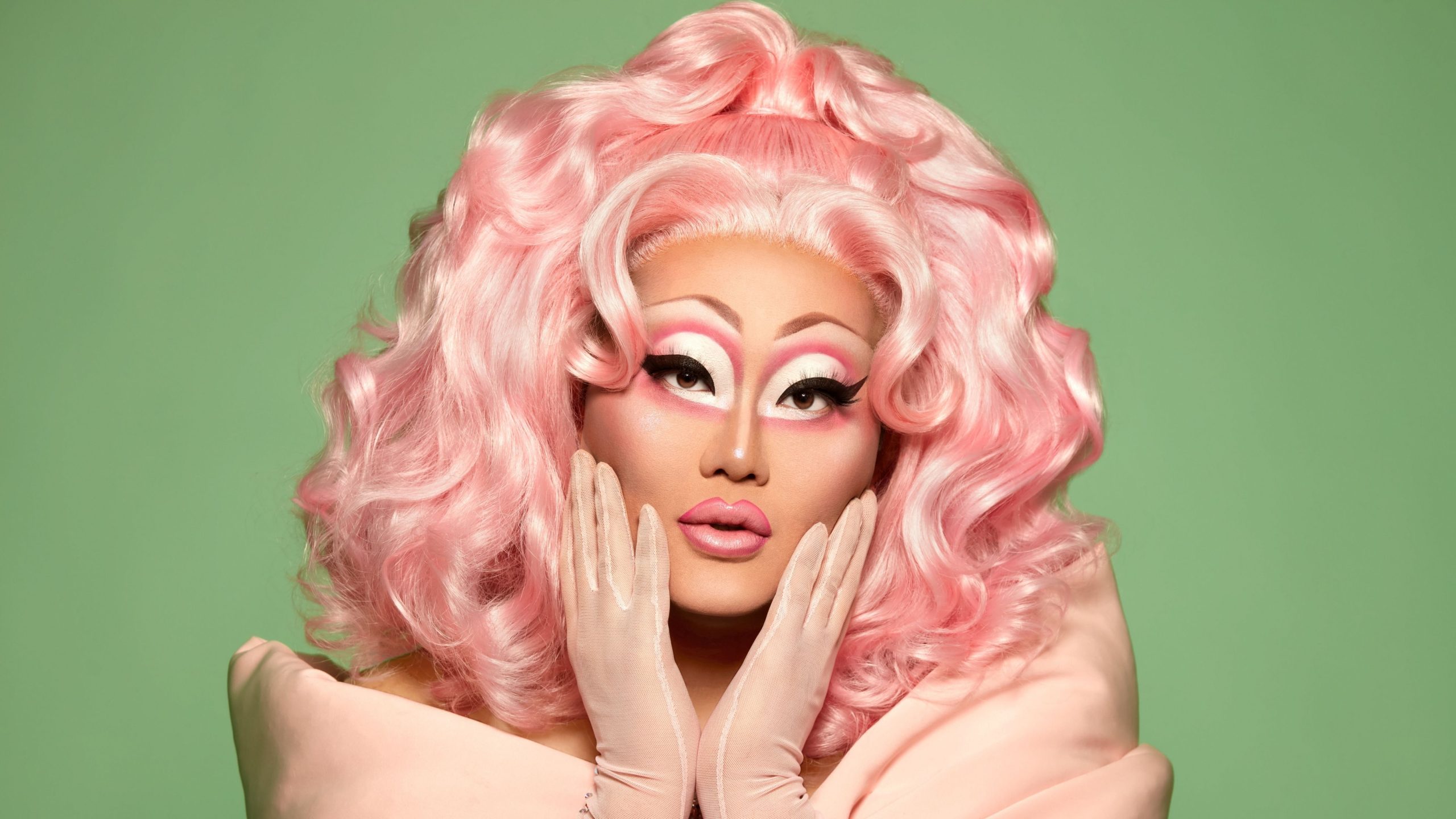

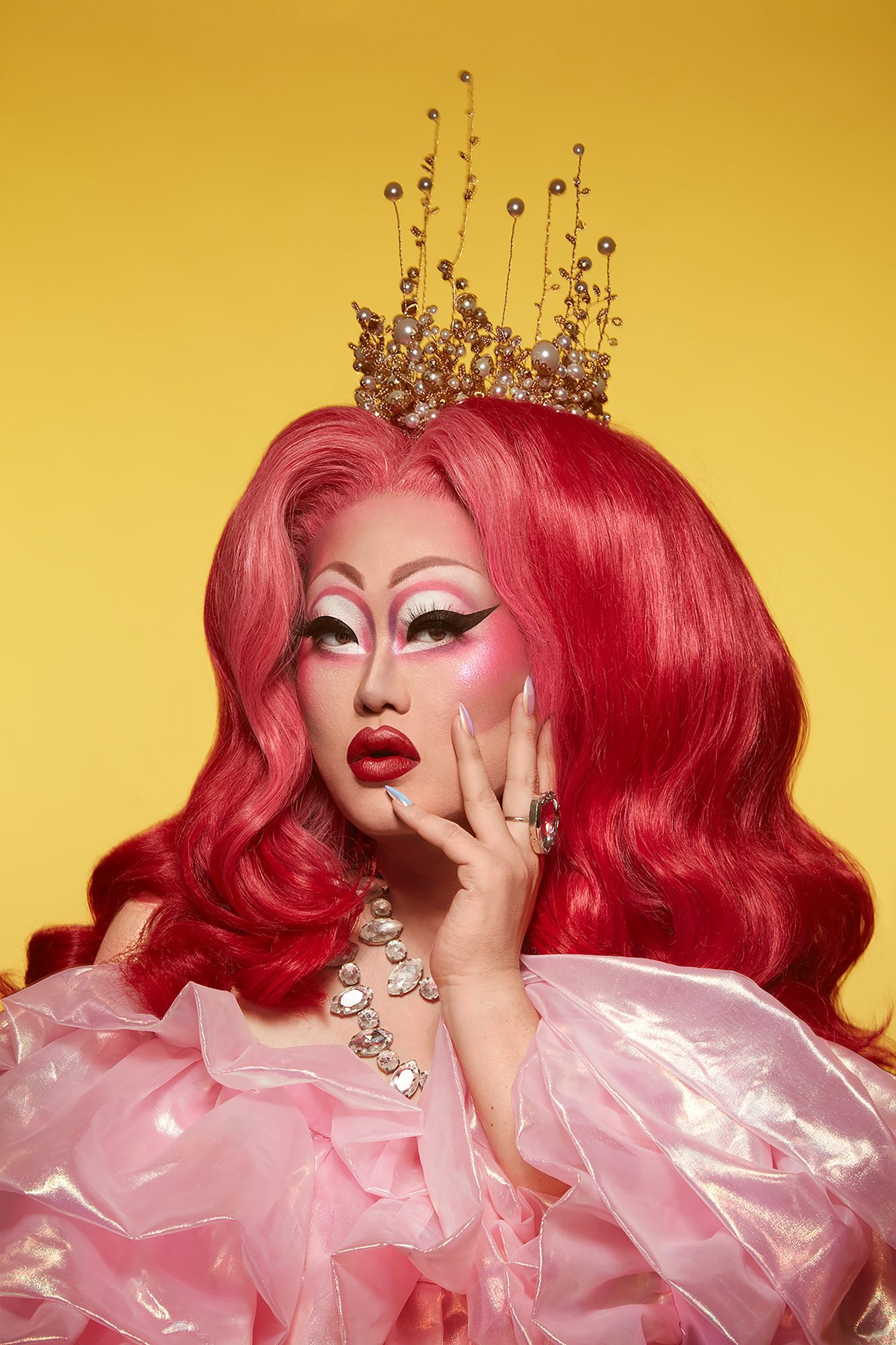
When people hear the name Kim Chi, most think immediately of the drag queen, the beauty entrepreneur, the cookbook author, and the cultural figure whose bold aesthetic and personality have transformed spaces from the stage to the beauty aisle. But ask Kim Chi who she sees first when she thinks of herself, and the answer cuts through the layers of persona and fame: an entrepreneur, a learner, a relentless experimenter.
“I guess entrepreneur would be like the most correct way to put it,” Kim Chi says, speaking in her signature rhythm, precise and thoughtful. “But I'm always someone who loves new challenges and I love learning new skills. I love doing things I've never done before. So if there's something that I haven't done, I'm all for the chance to do it—I’ll always say yes to it.”
Curiosity, she notes, has always been at the center of her drive. “Maybe because I'm someone who gets bored very easily, just constantly in need of stimulation. I'm always looking for new ways to keep my brain wired. Maybe I'm undiagnosed ADHD or something.”
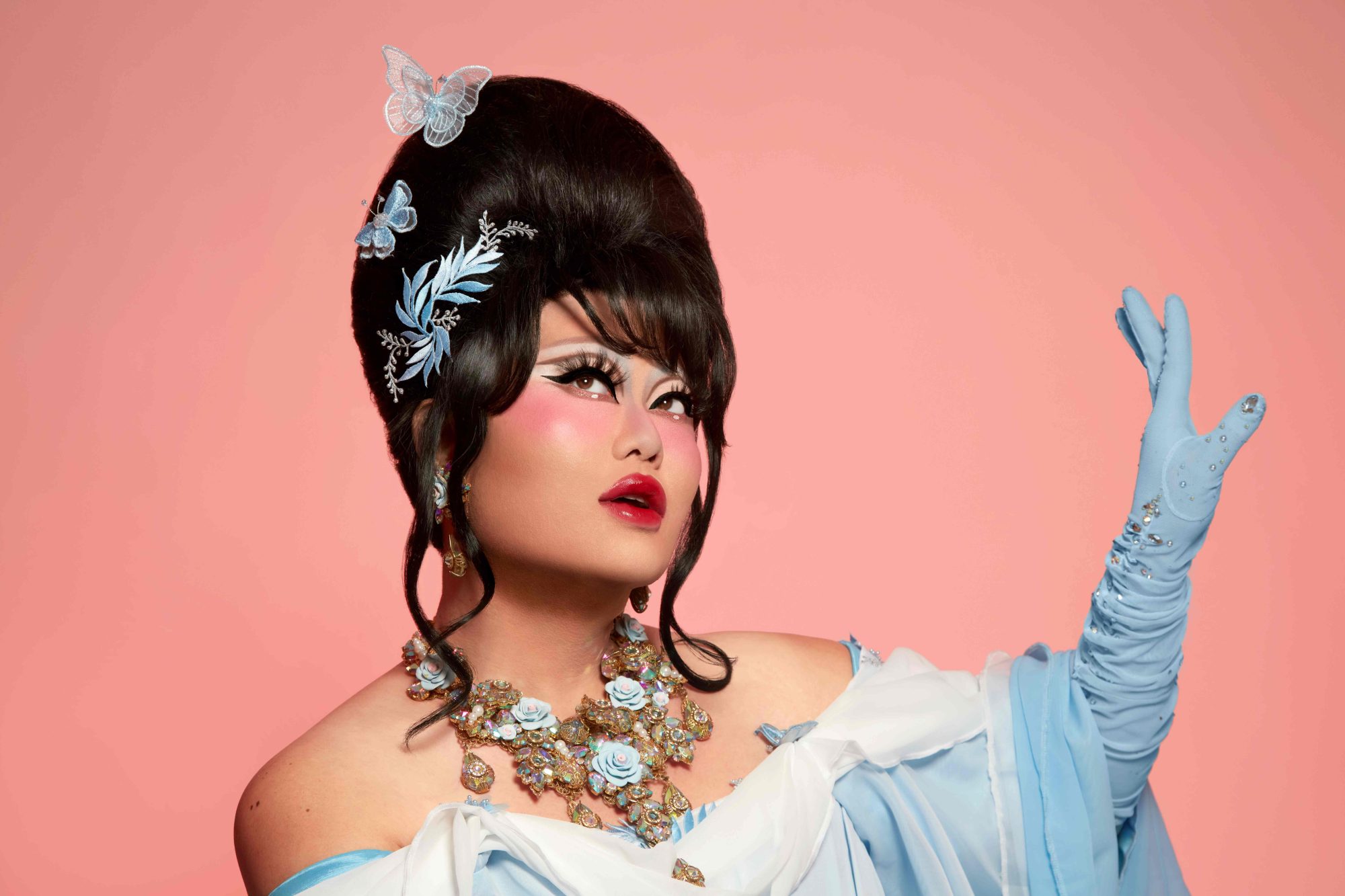
For Kim Chi, curiosity became the launching pad for entrepreneurship. Long before mainstream audiences recognized drag as a cultural and commercial force, she saw opportunity in the intersection of performance and product.
Drag was once seen as a subculture. Today, it's become a large part of mainstream culture in so many ways. As a result, an opportunity to build an incredible business foundation on.
Her journey into commerce was unintentional but intuitive. Watching RuPaul’s Drag Race as a young performer, she noticed a gap. Many queens she admired were selling merchandise, but the products weren’t what she would consider aesthetically pleasing, nevermind something fans would be proud to wear.
“After I got on Drag Race, I wanted to make sure all my merch was cute. I wanted to create things that I want people to wear proudly instead of really hokey merchandise,” she explains. She designed her own T-shirts with the care of a graphic artist, creating pieces that could stand alone as fashion items, even for those unfamiliar with the persona behind them. Limited-run T-shirts sold out episode by episode, and enamel pins designed like customizable paper dolls became instant collector’s items.
“There is potential to be had for designing a good product, not just drag merchandise,” she says, noting that the appeal extended far beyond her immediate drag fanbase.
The lessons of entrepreneurship (learning by doing, leveraging community, creating exclusive yet approachable products) continued to define her approach. Kim Chi’s background as a graphic designer gave her an eye for design, but not necessarily the tools of business.
“My main MO was to hire the most talented people not everyone is working with, especially queer Asian American talent,” she says. Through Instagram and Tumblr, she discovered illustrators and artists whose work became integral to her early products. “When you hire high-level talent like that, they provide amazing work, and it’s mutually beneficial because they get exposure and fair compensation.”
This ethos of community-building extends into Kim Chi’s beauty brand, Kimchi Chic Beauty. Unlike many celebrity-backed lines that rely on fame alone, she emphasizes product quality, longevity, and personal connection.
“The idea of success,” she explains, “doesn’t necessarily mean financial success. For me, success is about legacy. I want people to know my products because they genuinely love them and incorporate them into their daily routine, even if they have no idea who I am. That would be true success for me.”
Navigating the challenges of the beauty industry, compounded by unpredictable events like COVID-19 and supply chain disruptions, Kim Chi relies on a philosophy of resilience and adaptability. “You literally just have to take it day by day,” she says. “You never know what kind of irrational things are going to come from the government, or what kind of breaking news is going to change everything.” Yet with a dedicated team who believes in the brand, she continues to pivot, innovate, and deliver.
A key element of her success, she notes, lies in authenticity. Kim Chi’s drag persona is not a mask but an extension of herself. “The persona of Kim Chi is like a live-action anime character who loves high fashion. That is genuinely who I am as a person, too. I’m a nerd who loves glamour.” This authenticity has allowed her to build a personal brand that translates seamlessly into business, creating a loyal following that appreciates both the artistry and the entrepreneurial savvy behind it.
Cultural identity has always been integral to her work. Before K-pop reached global ubiquity, Kim Chi performed K-pop songs exclusively, bringing Korean culture into the Chicago gay nightlife scene. “By me picking a name, Kim Chi, and only performing K-pop songs, I was forcing my Korean culture into that space,” she recalls. Today, with K-pop everywhere, her early efforts feel prescient, part of a larger cultural wave she helped to nurture.
The alignment between personal brand, cultural leadership, and business strategy is deliberate. “I feel like the same person in and out,” she says of her drag and business personas. “I’m just presenting in whatever form I want to present.” There’s no need to chase a seat at someone else’s table. Kim Chi builds her own, confident that those who appreciate her vision will join her there.
Beauty, for Kim Chi, is both personal expression and cultural tool. “I’m a firm believer that everyone should do whatever they want to do as long as they’re not harming anybody else,” she says. “When it comes to beauty, don’t worry about what other people think. Just put on the colours and shapes that make you happy—whether it’s completely neutral or rainbow puke. Do what makes you happy.”
Her brand continues to challenge traditional barriers of gender, race, and expectation. “Makeup has been associated with femininity in the Western world, but in Asia, a lot of guys wear makeup and no one says it’s gay or wrong—they consider it self-care,” she explains. Kim Chi envisions a future where makeup and beauty are tools of inclusivity and liberation, not restriction.
What makes Kim Chi remarkable is not just her success but her worldview. Her goal, she says, is simple: peace and happiness. Not empire-building or dominance or perpetual acceleration. She is acutely aware of the world’s heaviness—politically, socially, technologically. And she counters it with joy.
Joy is not frivolous. It is not trivial. It is not naive. In Kim Chi’s hands, joy is a rebellion. Joy is a thesis. Joy is a survival strategy.
Whether she’s building a beauty brand, painting a face, or sitting with friends at a perfectly chosen restaurant, Kim Chi isn’t escaping the world. Rather, she's remaking it one brushstroke at a time.
In an age where everything feels optimized, automated, and overanalyzed, Kim Chi reminds us of something refreshingly analog: beauty is meant to expand us. To soften us. To let us imagine a world where more of us fit.
And maybe that is the legacy she hopes to leave: possibility, not perfection.
“Hopefully they’ll say I was a silly little artist who fought for what was right,” she says.
If that’s the case, then Kim Chi has already won.
RELATED: Inside GLORY's Inaugural Pride Party with Brooke Lynn Hytes