Wimbledon, Woven: Jaipur Rugs Turns Centre Court Into Couture
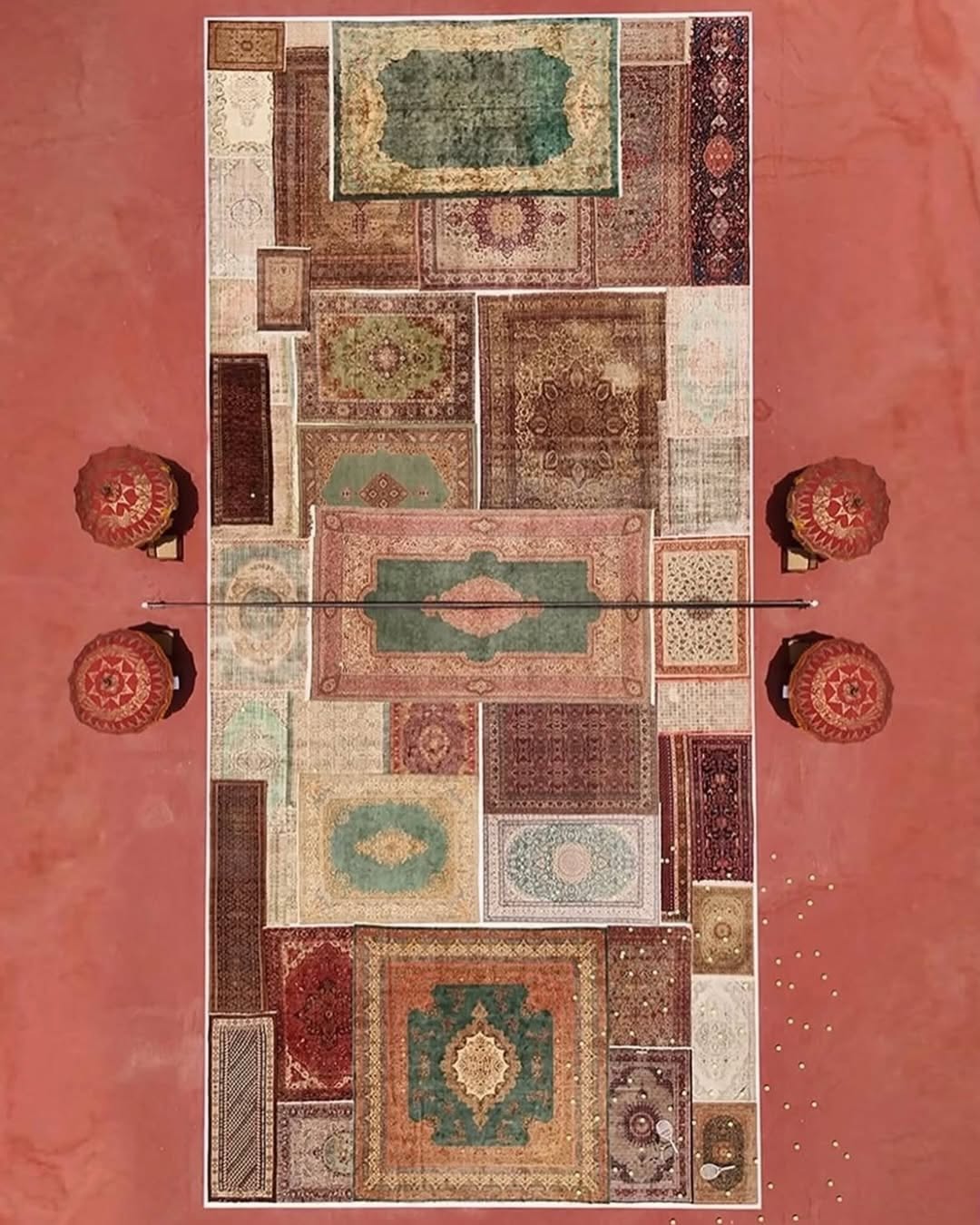
The Jaipur Rugs tennis court was not a gimmick, it was a statement in texture. In 2024, to mark Wimbledon and the opening of its first London showroom, the Indian house reimagined tennis’ most sacred rectangle in hand knotted wool, each line and service box rendered with the patience of loom work rather than paint. You could almost feel the hush of the All England Club translated into pile, that soft, insistent quiet you get when craft is doing the talking.
The timing carried a pleasing sense of narrative. The installation landed alongside Indian tennis star Rohan Bopanna’s Wimbledon campaign, and just before he went on to represent India at the Paris Olympics. Sport has always loved symbolism, but rarely does it meet artisanal tradition with this kind of confidence, not as costume, and not as nostalgia. The Jaipur Rugs tennis court treated heritage like a living material, capable of taking on global iconography without losing its accent.
The Jaipur Rugs tennis court, and the art of making a logo human
Plenty of luxury brands chase cultural relevance by borrowing the language of sport. Jaipur Rugs did something more interesting, it borrowed sport’s most recognisable symbol and made it unmistakably handmade. Tennis courts are normally about precision, but here precision had a pulse. The surface read as graphic from a distance, then up close it became an atlas of tiny decisions, knots, colour shifts, and the gentle irregularities that prove a human hand was there.
For London, a city that can be both dazzled and jaded, it was a smart way to introduce a showroom. Not with a whisper, not with a shout, but with a tactile provocation. The brand has long argued for craft as contemporary design, and this was the thesis made visible, and touchable. You get the sense it was also aimed at the fashion crowd that descends on Wimbledon every summer, the ones who understand that performance is never only about winning, it is about staging.
Why this London moment mattered
London does not need another luxury address. It does, however, make room for ideas that arrive fully formed. Jaipur Rugs chose Wimbledon because it is instantly legible, even to people who never watch tennis, and because it carries a particular British theatre of tradition. By weaving that theatre into rugs, the brand positioned Indian craftsmanship not as an export product, but as a cultural author.
It is also worth noting the clarity of the visual. A tennis court is a diagram, almost a piece of minimalism. Translating it into textile turns that minimalism sensual. The eye reads geometry, the body imagines softness. In an era when so much luxury communication happens on a screen, the Jaipur Rugs tennis court was defiantly physical.
From Wimbledon to Paris, with Rohan Bopanna as an anchor
Rohan Bopanna’s presence in the campaign gave the installation emotional ballast. This was not sport as abstract inspiration, it was sport as lived ambition. Wimbledon is an apex for any tennis player, and the run up to the Paris Olympics sharpened the narrative into something national without turning it into pageantry. The Jaipur Rugs tennis court became a kind of ceremonial ground, a place where contemporary Indian excellence in different disciplines could share the same frame.
Luxury, at its best, understands that objects carry stories, and that stories travel faster than product claims. By connecting the rugs to a real athlete’s season, Jaipur Rugs avoided the trap of making craft feel like a museum piece. Instead, it felt kinetic, current, and slightly daring.
A masterclass in cultural storytelling, not just installation spectacle
If you are tracking how Indian luxury brands are expanding their global vocabulary, this campaign remains one of the cleanest examples. It did not dilute its identity to feel international. It made an international icon accommodate Indian making. That is the subtle power move.
The broader takeaway is about proportion. The idea was simple enough to understand in a second, yet rich enough to reward attention. That is the sweet spot for modern brand storytelling, especially in design, where audiences can smell empty theatre from a mile away.
For readers who follow the intersection of craft, fashion, and the new codes of luxury, this sits neatly alongside other design led cultural moments we chronicle at Glory Fashion, the brand world building explored in Glory Culture, and the interiors lens of Glory Design.
To revisit the brand behind the spectacle, start with Jaipur Rugs. For the broader Wimbledon context, the tournament’s official hub at Wimbledon.com remains the cleanest reference point, and Bopanna’s career record is best tracked through the sport’s own data at ATPTour.com.
Image Credits: Luxurious.