From Shelter to CEO: How Evio Beauty Founder Brandi Leifso Defied All the Odds
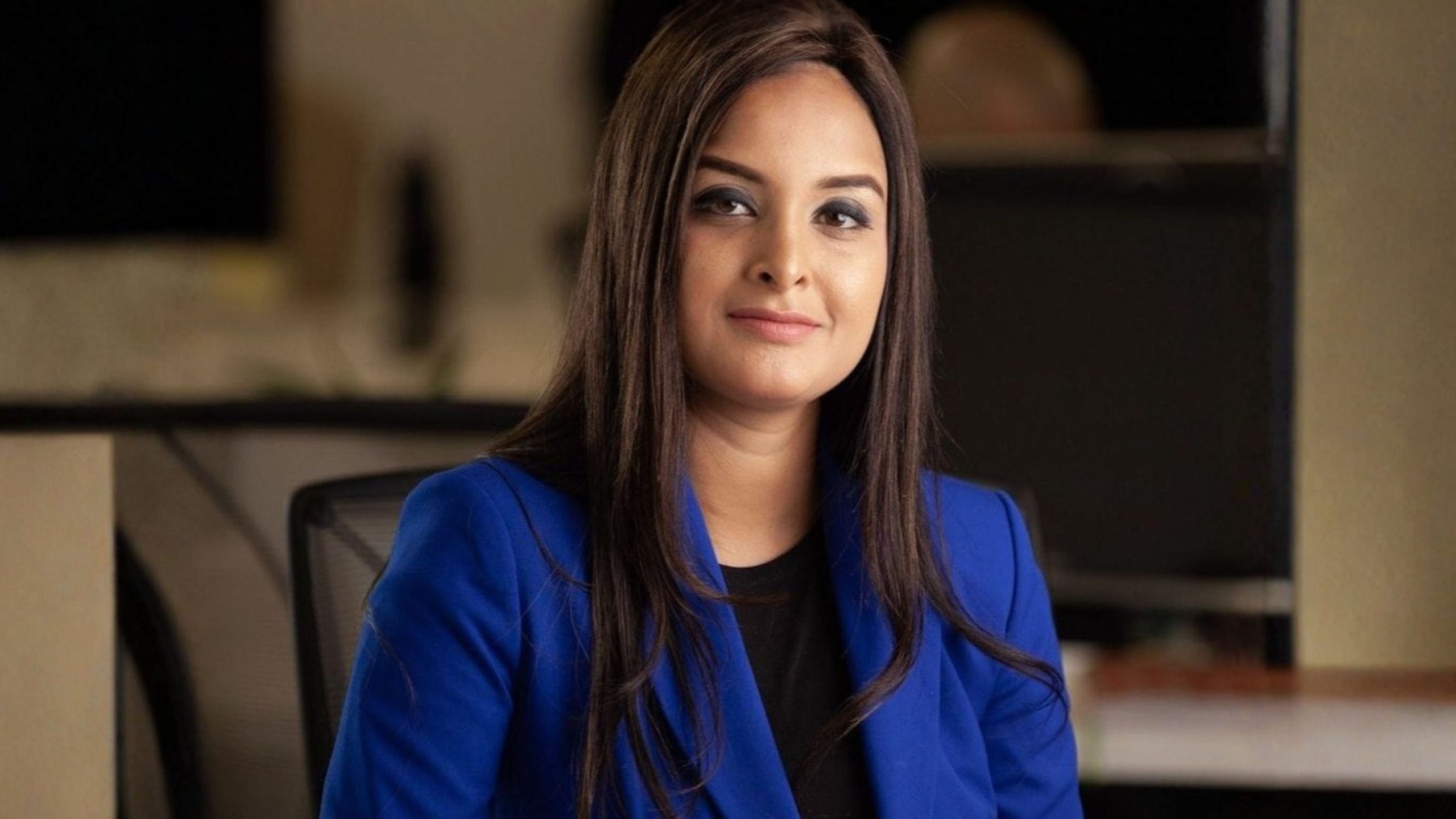
At 21 years old, Brandi Leifso was living in a safe house shelter in Vancouver with 29 other women who, like her, were escaping domestic violence and human trafficking. She had $15, a laptop, and little certainty about what came next.
What she did have, however, was anger. That, and a growing conviction that her life could not stay the same.
That anger would eventually become the foundation for Evio Beauty, a purpose-driven skincare brand built around one deceptively simple idea: stress changes your skin. Today, Leifso is the founder of Evio Beauty, a company focused on reducing the effects of stress on skin through hydration-focused skincare, while also raising more than $500,000 for shelters across Canada.
But Leifso’s story is not just one of entrepreneurship. It’s also about redefining power and understanding how the smallest decisions can change the course of a life.
Building a Brand in the Middle of Chaos
When Leifso describes her early twenties, she does so with striking honesty.
“Brandy at 21 was angry,” she says. “Angry and determined.”
The version of herself that began building what would eventually become Evio Beauty wasn’t driven by a polished business plan. In fact, the first iteration of the brand didn’t even have its current name. It started as Karma Face, a title that reflected her mindset at the time.
“Brandy at 21 really felt like what goes around comes around,” she explains. “I’m going to stay focused on good things so the good things come back to me. And karma will take care of the rest.”
The anger she describes wasn’t destructive so much as it was directional. Fueled by what she saw as a lifetime of injustices and circumstances that culminated in her time at the shelter, it became the spark that pushed her to imagine something different.
“I just really didn’t want to be in that position anymore,” she says. “I recognized that I was going to have to make a sequence of new choices to make my life better.”
The Power of Choice
Those choices are central to how Leifso now thinks about power.
For many people, power can feel abstract: tied to status, influence, or authority. But Leifso’s experiences reshaped that definition.
“The power is in the choices that we’re going to make,” she says.
When something doesn’t work out, she explains, the lesson isn’t failure but information.
“When you realize that you made the wrong choice or you realize the repercussions of a choice that you didn’t think would turn out that way, you just make a new choice. You bring it all in as data, and that data is very powerful.”
It’s a perspective that has fundamentally shifted how she sees the world. Even people at the top of their careers, she says, are navigating uncertainty.
“I used to look at people on pedestals and think they had everything figured out. I really don’t see things that way anymore.”
Instead, she believes power comes from the ability to continually evolve and redefine who you are.
“Even when we feel stuck and we feel like we have no choice, we really do have a choice,” she says. “To me that’s what power is: having the agency to continue to make new choices and recreate yourself.”
Rethinking the Shelter System
Despite the hardship of that period in her life, Leifso is careful to challenge the stigma surrounding shelters.
Safe house shelters (particularly those designed for survivors of domestic violence) operate differently than many people assume.
“Nobody can know where you live,” she explains. “You can’t share your address with your best friend or your sisters or your mom.”
The shelters are designed to provide safety and stability during moments of crisis. Meals are shared, chores are communal, and resources are available to help residents navigate legal systems, police reports, and recovery.
“It really is a place with a lot of kindness and a lot of joy, if you’re willing to let it in,” she says.
Looking back, Leifso believes the greatest barrier to accessing those resources isn’t always public perception but internalized stigma.
“There were so many more services that I should have utilized, but I was so proud,” she says.
At the time, she believed others needed the help more than she did.
“I wish that I wasn’t so proud in the moment and that I utilized more of the services that were available.”
Today, she believes dismantling those internal barriers is just as important as changing public perception.
“To me, the most important thing is to dismantle the biases from the people who need to utilize the services,” she says.
A Protest Against the Beauty Industry
Evio Beauty didn’t begin as a conventional startup idea. In many ways, it began as a protest.
Leifso had trained as a makeup artist and worked in film, television, and bridal beauty. But during her early twenties, she began to notice a pattern in the industry. She describes it as eerily similar to an abusive relationship.
“The beauty industry would tell you what’s wrong with you and then tell you how to fix it,” she says.
For her, that messaging mirrored the emotional cycles she had experienced in abusive environments.
“They tear you down, tell you everything that’s wrong with you, and then build you back up so you feel like you can’t live without them.”
Leifso realized she had also internalized that dependency.
“I would have never left the house without makeup,” she says. “I definitely had a dependency on the beauty industry.”
The brand she envisioned needed to challenge that cycle. Instead of focusing on perfection or correction, she wanted to create products that supported skin health, particularly for people experiencing stress.
“We know that stress is the leading cause of disease,” she explains. “It affects all your body’s organs, so we focus on your body’s largest organ, which is your skin.”
Learning by Doing (and Failing)
Leifso didn’t come from a traditional business background. Much of her early knowledge came from teaching herself through YouTube tutorials. She also learned by doing—and by making plenty of mistakes along the way.
“You have to work through the cringe,” she says with a laugh.
When she later revisited her early branding while writing her book, she found the original campaigns almost unrecognizable.
“The brand was so cringe,” she says. “But I just put it out into the world and kept refining.”
One of her earliest campaigns involved dressing up her makeup products in costumes for Halloween (complete with filters and fake mustaches.)
Still, those imperfect experiments served a purpose.
“Maybe it was easier during that time because Instagram didn’t exist,” she says. “There wasn’t as much comparison.”
Without the pressure of constant comparison, she could simply create, release, and improve.
When Validation Arrived
The moment Leifso first realized the brand might become something bigger came when she received a purchase order from beauty subscription company Ipsy.
The order was massive: more than 200,000 units.
“I thought, wow, someone believes in me,” she recalls.
Even though she admits she struggled with the logistics of fulfilling that order (and still apologizes to the company years later) the validation changed her outlook.
Soon after, investors began approaching the brand, and industry partners began to take notice.
“That’s when I thought, okay, this is something bigger,” she says.
Beauty’s New Direction
More than a decade after launching her first beauty products, Leifso believes the industry has shifted in meaningful ways. Much of that change, she says, comes from the growing number of women founders shaping the industry.
“In the early days, it was a bunch of men (primarily old white men) in a boardroom making decisions based on their beauty standard,” she says.
Today, that landscape looks different. Women are creating brands for themselves and their communities, and the industry has begun to embrace inclusivity, sustainability, and non-gendered products.
“It’s good to see the beauty industry bleed into a more inclusive space,” she says.
For Leifso, that shift reflects something larger than cosmetics. It reflects the power of people rewriting the rules of the systems they once felt excluded from.
And for someone who started with $15 and a laptop in a shelter, that kind of reinvention is more than possible.
It’s proof that sometimes the most powerful thing you can do is make the next choice.