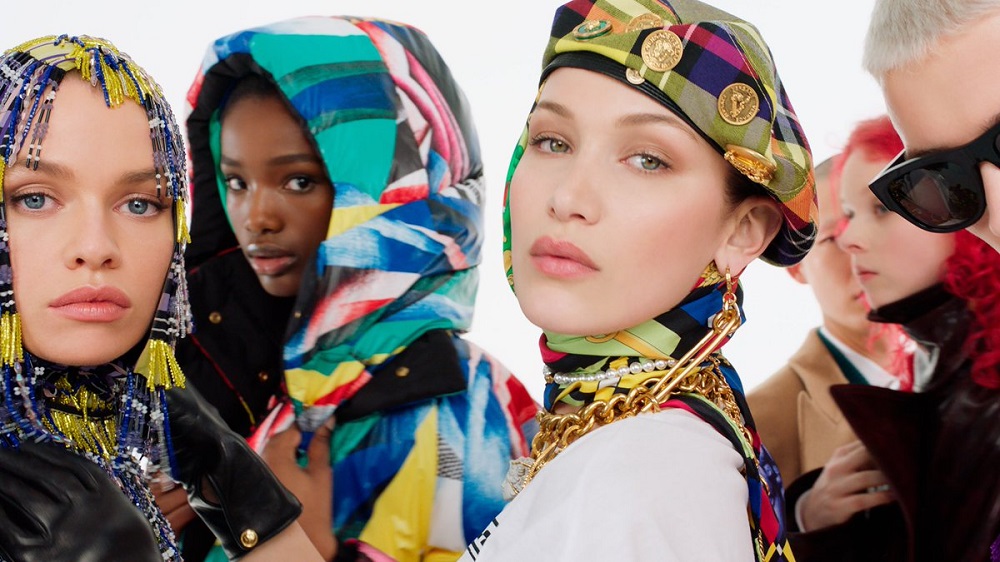


Versace Campaign / Image: Twitter/Versace
Fashion capitalism at its finest.
Written by Jessica Graham
The rumors that Italian fashion house Versace is for sale, are revealing to be true according to multiple sources. The Financial Times reported Monday that, “the Versace family [is] selling alongside US private equity firm Blackstone -- which took 20 percent stake in Versace in 2014.” The brand has been considering a market listing for years after Blackstone bought a 20% stake in 2014 to help aide expansion overseas. According to another story by Reuters, Blackstone found that the brand’s performance was insufficient, therefore not worth putting any more money into as an independent market listing. The report by Reuters goes on to reveal accessible American luxury label Michael Kors has offered to take control of Versace’s fate, with a deal that values the company at $2 billion. The Versace family is revealed to also keep a role within the fashion house, and that Blackstone will exit amongst Kors’ arrival. Representatives from Versace, Michael Kors, and Blackstone have yet to confirm the major acquisition.Back in the spotlight
What Versace needs now, according to reports, is a really heavy investor - despite having a year in the spotlight. Founded by Gianni Versace in 1978, the giant fashion house has always operated independently, most notably after Gianni’s death. In May, Donatella Versace, artistic director and Vice President of the brand, co-chaired and sponsored the Met Gala: Heavenly Bodies and the Catholic Imagination, which saw over one million visitors, making it the most attended exhibition at the Costume Institute. Not to mention the non-stop talked about tribute collection Donatella debuted during Milan Fashion Week in September 2017, to mark the 20th anniversary of Gianni Versace’s death. FX even filmed a television series on the assassination of Gianni Versace just this year, which won big at the Emmy Awards last week. This deal will be another result of the triumphing power reigning over the fashion industry by the hands of luxury firms. LVMH and Kering, the two main Europe-based powerhouses of the industry, have managed to invest in countless fashion houses over the years, making it extremely difficult for the smaller and independent fashion houses to survive without outside investment.International competition