
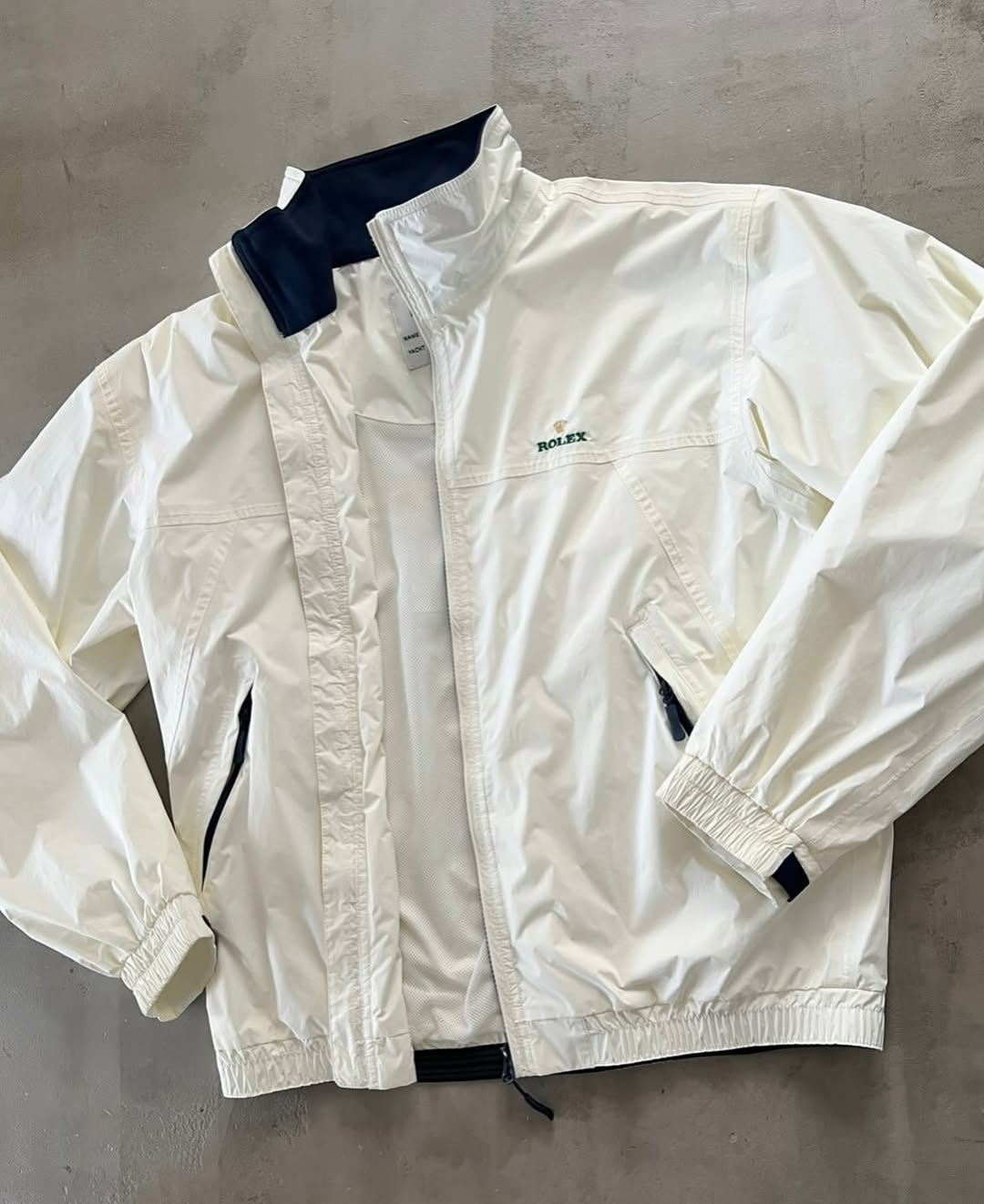

Vintage luxury streetwear has a funny way of sneaking up on you, first as a wink in the right crowd, then as a full blown uniform. The clearest case study is the Rolex Official Sponsor kit, those immaculate 80s and 90s jackets, polos, and caps that were never meant to be bought at all. They were issued, quietly, to VIP clients, authorized dealers, and athletes circling tennis courts, golf greens, and marina decks where the brand’s presence hummed like perfectly regulated movement.
That origin story matters. When something begins as access rather than inventory, it carries a different kind of authority. The fabric feels heavier, the cuts are cleaner, the branding is discreet enough to dodge parody. And the look, all crisp whites, navy trims, and club house restraint, lands today with the kind of ease most modern collaborations can only imitate.
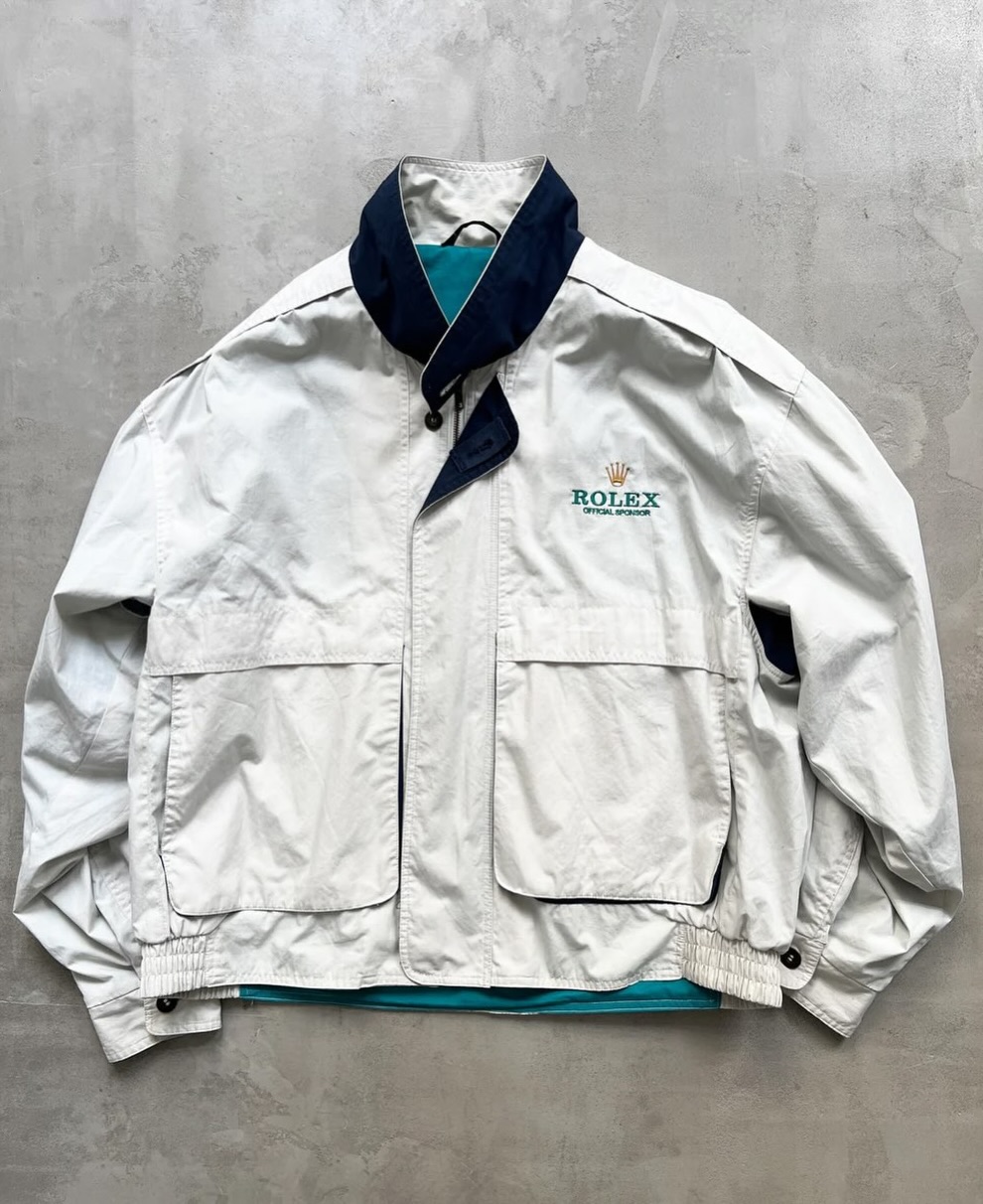
Vintage luxury streetwear, the quiet flex that ages well
The appeal of vintage luxury streetwear is not just rarity, it is tone. Official Sponsor pieces sit in that sweet spot between sport and ceremony, designed to look correct under sun glare and clubhouse lighting. You can almost smell the starch and sunscreen. The best ones have the kind of stitching you notice with your fingertips, the kind of cotton that holds its shape after decades, the kind of embroidery that reads like a private credential.
Unlike merch that screams for attention, these kits speak in fluent understatement. A small coronet on a chest pocket. A tournament name on the sleeve. The kind of branding that assumes you already know. It is why they now feel so modern, even as they come freighted with a very specific fantasy of leisure.
Why these kits were never supposed to be “fashion”
In the 80s and 90s, the point was alignment, not sales. Rolex was underwriting prestige events and rewarding the ecosystem around them. Think hospitality suites, dealer dinners, athlete entourages. This was gear as soft power, not product as profit. In that sense it shares DNA with other era specific sponsor apparel, but Rolex did it with a particularly exacting hand, consistent with a maison that still positions itself around excellence and time.
For context on how the brand frames its own sporting relationships, the official Rolex site and its sponsorship pages are telling, the language is always about legacy, not marketing. And if you want the watch world’s temperature on what becomes collectible, Hodinkee remains a sharp barometer, even beyond timepieces.
How to wear Rolex Official Sponsor pieces today
The quickest way to ruin vintage luxury streetwear is to treat it like costume. The better move is to let the garment do the talking, then modernize everything around it. A sponsor jacket over a transparent knit, or with rinsed denim and slim loafers. A polo with tailored trousers that break just right at the shoe. Keep the palette clean, let the silhouette breathe, and resist stacking logos. These pieces were born in spaces where status did not need to shout.
If you are building a wardrobe that balances heritage and now, it is worth browsing https://www.glory.media/category/fashion for styling ideas, then going deeper into the mindset through https://www.glory.media/category/luxury and the collector lens at https://www.glory.media/category/watches.
What to look for when buying
Start with integrity. Check the hand feel, heavier cottons and solid ribbing. Look for embroidery that sits flat and dense, not puffy. Pay attention to zips and snaps, hardware often dates a piece faster than fabric. Provenance helps, but condition is king. For a sense of how serious the vintage market has become, Christie’s is useful context, even when you are not shopping at auction level.
The new grail economy, why archival sponsor gear wins
There is a reason vintage luxury streetwear keeps pulling collectors away from the obvious runway trophy. It feels earned. A Rolex Official Sponsor kit reads like an artifact from a world that still believed in discretion, in standards, in clothes that had to perform under polite scrutiny. Now, worn on city streets, the same restraint becomes the point. The piece does not beg for approval. It simply belongs.
Image credits to the respective owners.