
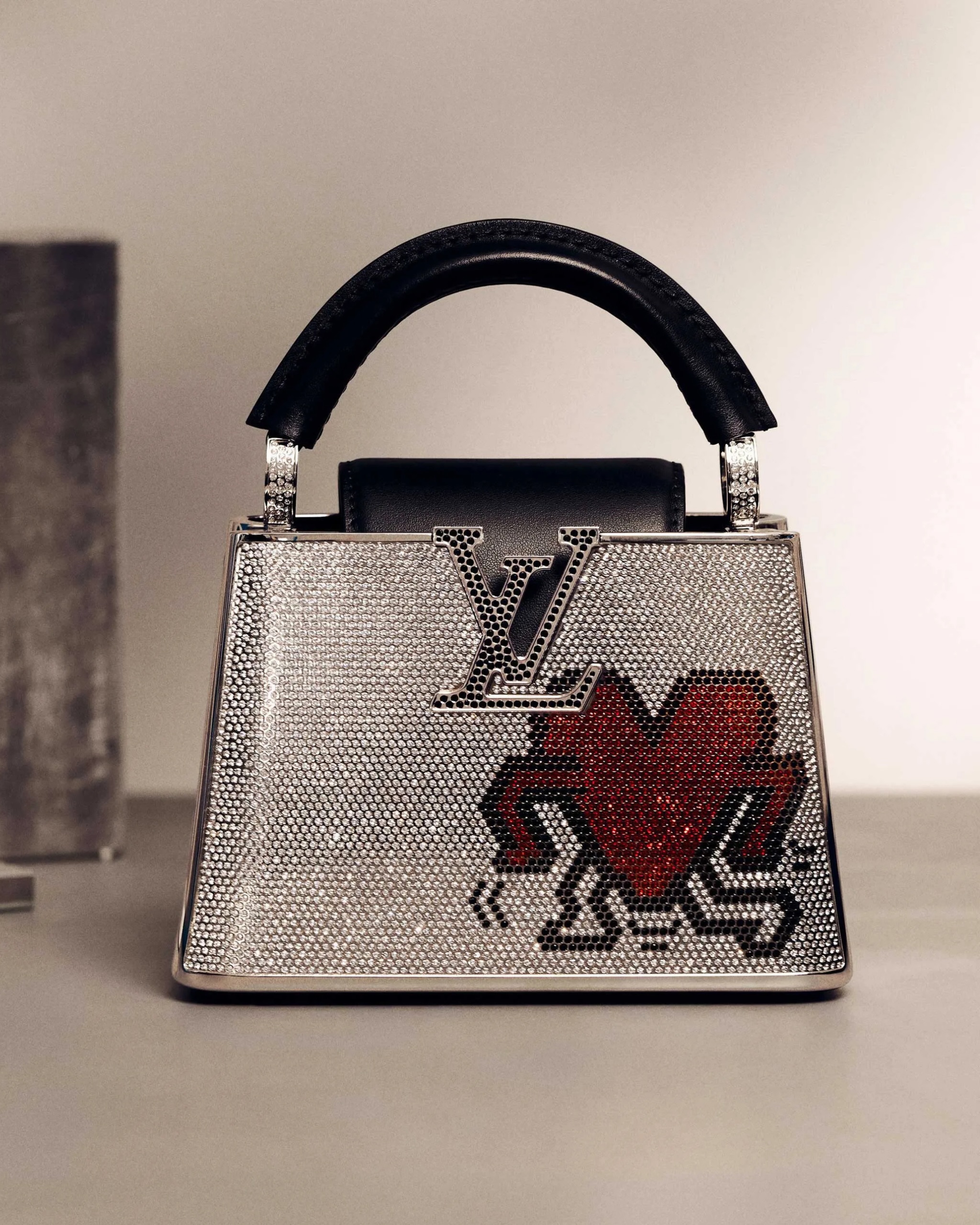

The Louis Vuitton Keith Haring collection understands something many fashion collaborations forget, the point is not to tame an artist, it is to let the work keep moving. Haring’s visual language was born in public, quick, insistent, made to be read at a glance and felt in the body. Here, his dancing figures and radiating symbols land on leather goods and travel pieces with an ease that feels truer to his street level charge than to any museum sanctity.
It is also, importantly, a Louis Vuitton story, one about objects built to travel, to be handled, to accrue a little patina and a little biography. The collection, launching in Louis Vuitton stores worldwide on January 1, 2027, is divided into five themes, Genesis, Figures, Brazil, Patches, and Maze, each keyed to a different moment in Haring’s life and practice. You can feel the line between art and wardrobe dissolve, then re form, then dissolve again.
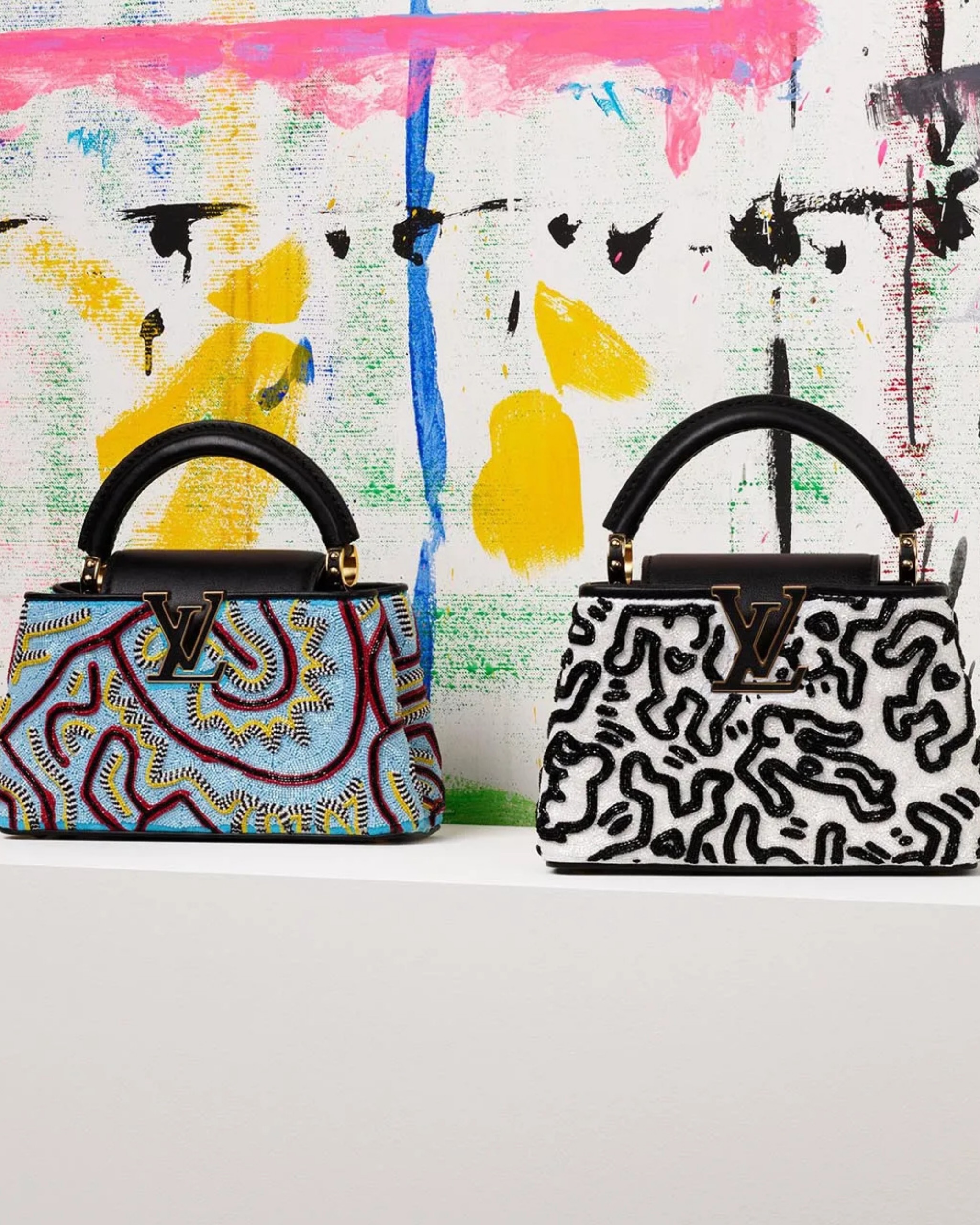
Louis Vuitton Keith Haring collection, five themes, one restless energy
The smartest choice is structural. Rather than treating Haring as a single graphic applied across a season, Louis Vuitton builds a small world with rooms. Genesis nods to the hand painted garment case that helped spark the idea, a reminder that Haring’s art has always been comfortable on things that move. Figures leans into the bodies, those unmistakable silhouettes that seem to dance and argue at once, and which feel oddly current in an era obsessed with gesture and visibility.
Brazil is a warm thread pulled from Haring’s personal references and travels, a theme that reads less like postcard nostalgia and more like lived looking, the kind that changes an artist’s palette and pace. Patches, inspired by patch covered jeans, is the most tactile of the set, a love letter to wear, repair, and the satisfaction of accumulation. Maze closes the loop. It is graphic, rhythmic, almost architectural, and it suits Louis Vuitton’s long fascination with pattern as identity.
When Haring’s line meets Louis Vuitton craft
What holds the collection together is the refusal to over polish Haring. His line stays urgent. On pieces like the Speedy Soft 30 and Speedy 25 Soft, that urgency plays against the softness and structure of the bags in a way that feels genuinely chic, not merely themed. Footwear, too, gets a jolt. The Motion Mule and Luna Pump flirt with pop allure, while the Trainer Sneaker and Lightbulb Sandal carry the graphic charge with an ease that reads modern rather than costume.
Travel pieces are where the collaboration feels most inevitable. A Valisette, in particular, makes sense as both object and idea, a portable stage for imagery that has always belonged to the street and the subway as much as the gallery. If you are interested in how houses translate art into product without sanding away its teeth, this is the category to watch.
Why this collaboration works now
Haring’s best work never begged for permission. It insisted on presence. In 2027, that insistence lands differently, in a culture where symbols are endlessly copied, flattened, and optimised. The Louis Vuitton Keith Haring collection feels like a counterpoint, insisting that iconography can still be authored, still be connected to a life, a politics, a city. For deeper context on Haring’s legacy, the Keith Haring website is a sharp place to begin, and the Keith Haring Foundation remains essential for understanding the philanthropic backbone of his work.
Louis Vuitton, for its part, is fluent in cultural conversation when it chooses to be. You can track the house’s wider world on Louis Vuitton, but the more interesting conversation happens when you look at how this collection sits alongside today’s broader appetite for collectible fashion that still gets worn.
If you are mapping the bigger style picture, it is worth reading this drop through the lens of what we often cover at Glory. Start with our take on modern wardrobe making in Fashion, then widen the frame with Luxury. For the cultural resonance, and why Haring’s language still feels like a public utility, our Culture pages offer the right mood and context.
What to look for in store
In practice, the pieces worth lingering over are the ones that let Haring’s spontaneity breathe. Look for placements that feel drawn rather than printed, for motifs that sit with the seams, and for leather that takes the graphic with confidence. The success of the Louis Vuitton Keith Haring collection is not in how loudly it declares the collaboration, it is in how naturally it reads as a wardrobe of objects that want to be lived with.
And yes, the familiar icons are here, the radiant baby, the bold contours, the playful symbols. But the collection’s real charm is its motion. Haring’s work was never still, and at its best, neither is fashion.
Image credits to the respective owners.