
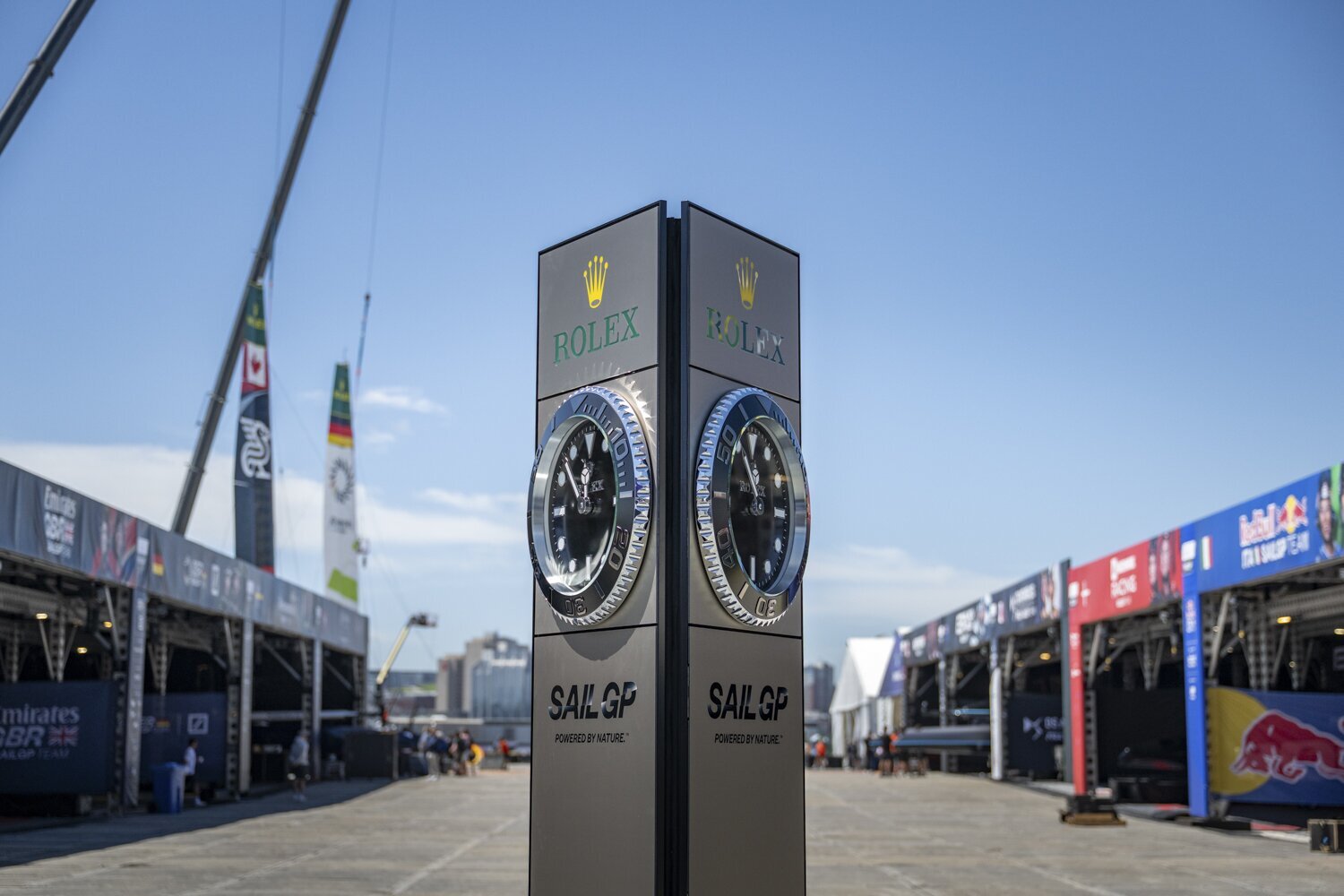

It's race day in Halifax Harbour. More than 6,000 fans pack the grandstands while thousands more line the waterfront, hotel rooftops, and even parking garages as 13 foiling, 50-foot catamarans skim across the water at speeds approaching 60 km/h, carving around marks just metres from shore. Watching from a chase boat, the speed feels even more startling as the boats lift clear of the water on their hydrofoils. This is SailGP's vision for the future of sailing: fast, close, easy to get into, and impossible to ignore.
It's also easy to see what attracted Rolex. SailGP is the newest of the watchmaker's high-octane sports partnerships, combining the speed and precision familiar from motorsport with a sport Rolex has supported for nearly 70 years.
Like a lot of people, I thought I knew what sailing looked like. If you didn't grow up around boats, it can feel like a different language. My own exposure mostly consisted of stumbling across races on television, wondering what exactly I was watching. But after a weekend at the Rolex SailGP Championship in Halifax, it became clear the competition prefers to describe it as racing rather than sailing.
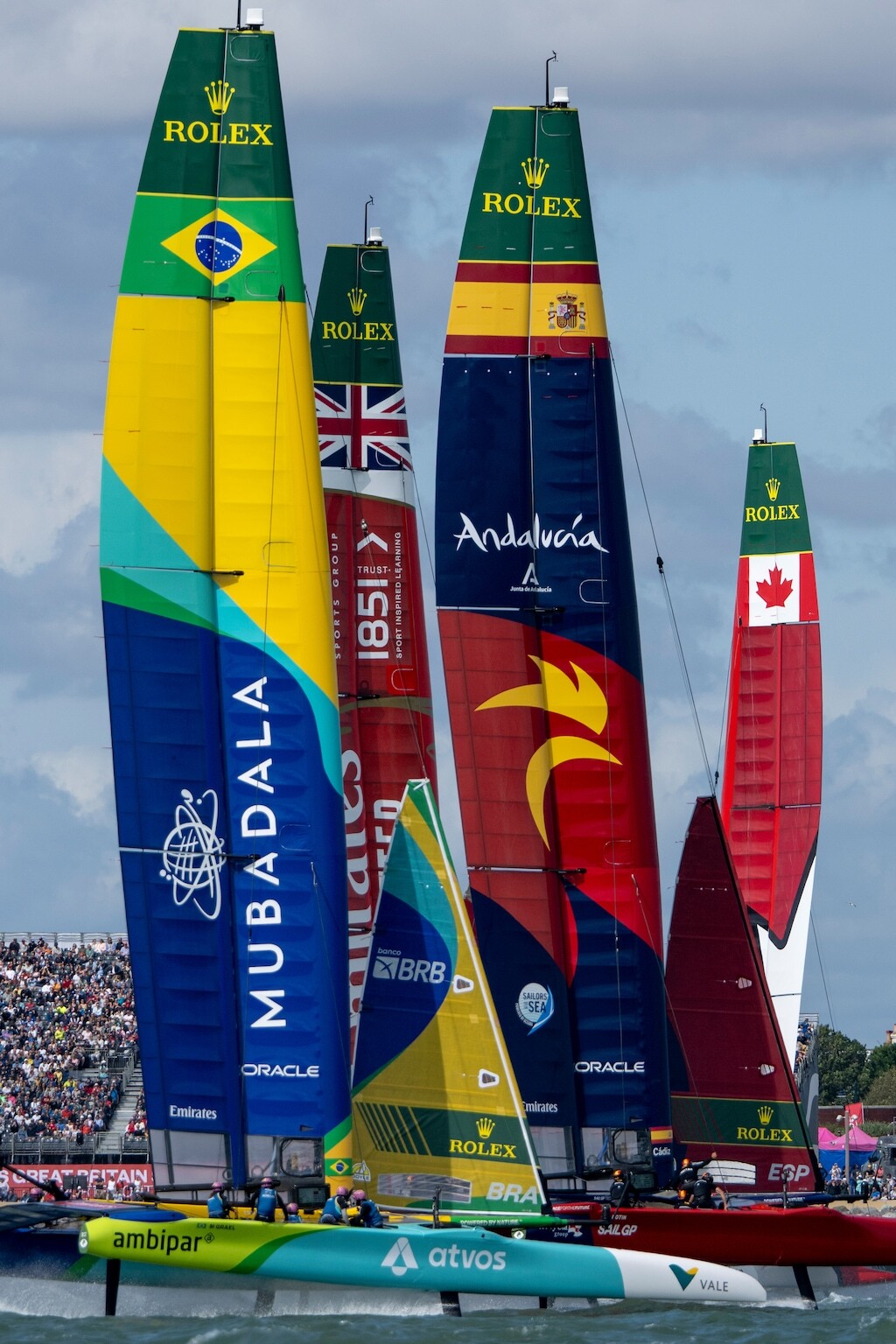
Founded in 2019 by Oracle co-founder Larry Ellison and champion sailor Russell Coutts, SailGP has quickly grown from six national teams to 13 competing across a global calendar for a $12.8 million prize purse. Along the way, the league has attracted an interesting mix of owners, including venture capitalists, athletes such as Kylian Mbappé and entertainers, including Ryan Reynolds, Hugh Jackman and Issa Rae.
There are obvious comparisons to Formula 1, but there's one crucial difference: every team races exactly the same boat. "If you have a faster boat than somebody else," says SailGP Managing Director Andy Thompson, "you've won the race before the race even starts." Instead, victory comes down to strategy, teamwork and execution. Each crew also includes at least one female sailor, making SailGP one of the few elite sports where men and women compete together at the highest level.
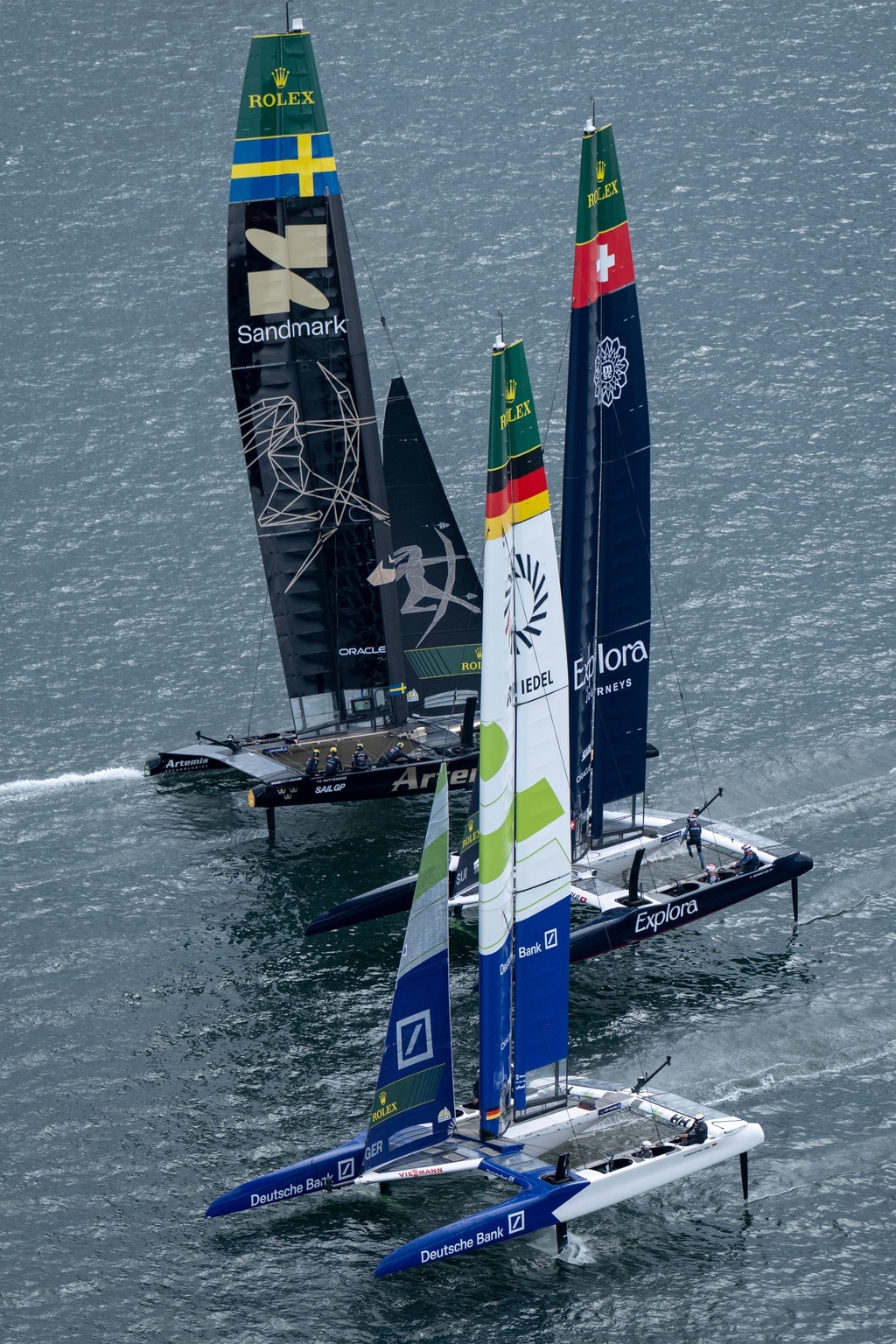
Touring SailGP's technical base across the harbour in Dartmouth, it became clear just how much precision goes into every race. Engineers, boatbuilders and software specialists assemble and maintain the F50s after they're shipped around the world between events. Unlike Formula 1, the technical information isn't closely guarded. Every team has access to the same race data (all uploaded to the Oracle cloud) and onboard footage, allowing them to study rivals and refine their performance.
The boats glide across the water with deceptive ease, but every manoeuvre requires dozens of actions to happen in perfect sequence. Slingsby calls it "a ballet of different motions that need to happen perfectly." There's little margin for error. This season alone, dramatic crashes in Auckland and New York showed just how quickly things can go wrong.

"It's all identical boats," Slingsby says. "So it comes down to relationships and bonds that are formed over time."
That level playing field also makes SailGP a natural fit with Rolex's long-standing focus on achievement. There's no technological advantage to lean on; winning comes down to preparation, precision and execution under pressure.
Every sailor has achieved some level of greatness, so for Slingsby it’s team chemistry that has helped Australia to one of the strongest starts in SailGP history. Slingsby wears several hats as both driver, CEO, and co-owner of the Bonds Flying Roos, a role made considerably easier after actors Hugh Jackman and Ryan Reynolds joined the team as co-owners. The new ownership has brought commercial stability and a Disney+ documentary series due next year.
Alongside major media markets like New York, Halifax has become one of SailGP's favourite stops. The harbour's deep water allows the F50s to race remarkably close to shore, while the city's enthusiastic crowds come out for it. "We feel really embraced by the entire community here," Thompson says. "When we came here last time, it felt like the entire town was on the waterfront watching."
That enthusiasm is great to see in a city with as much maritime heritage as Halifax, but SailGP's ambitions extend far beyond traditional sailing communities. The season-ending Race to Abu Dhabi drew a record 3.47 million viewers on CBS—the largest sailing audience in U.S. television history, according to the league—while social numbers continue to move upwards with over 1 million YouTube subscribers.
SailGP occupies an interesting space. It's undeniably premium, yet increasingly accessible. For generations, sailing has largely been watched by people who already spoke its language. SailGP is betting that the future depends on convincing everyone else.